
Positive displacement or velocity: the first decision
Almost every flow meter falls into one of two families. Getting this choice right at the start saves far more than picking a slightly better meter within the wrong one.
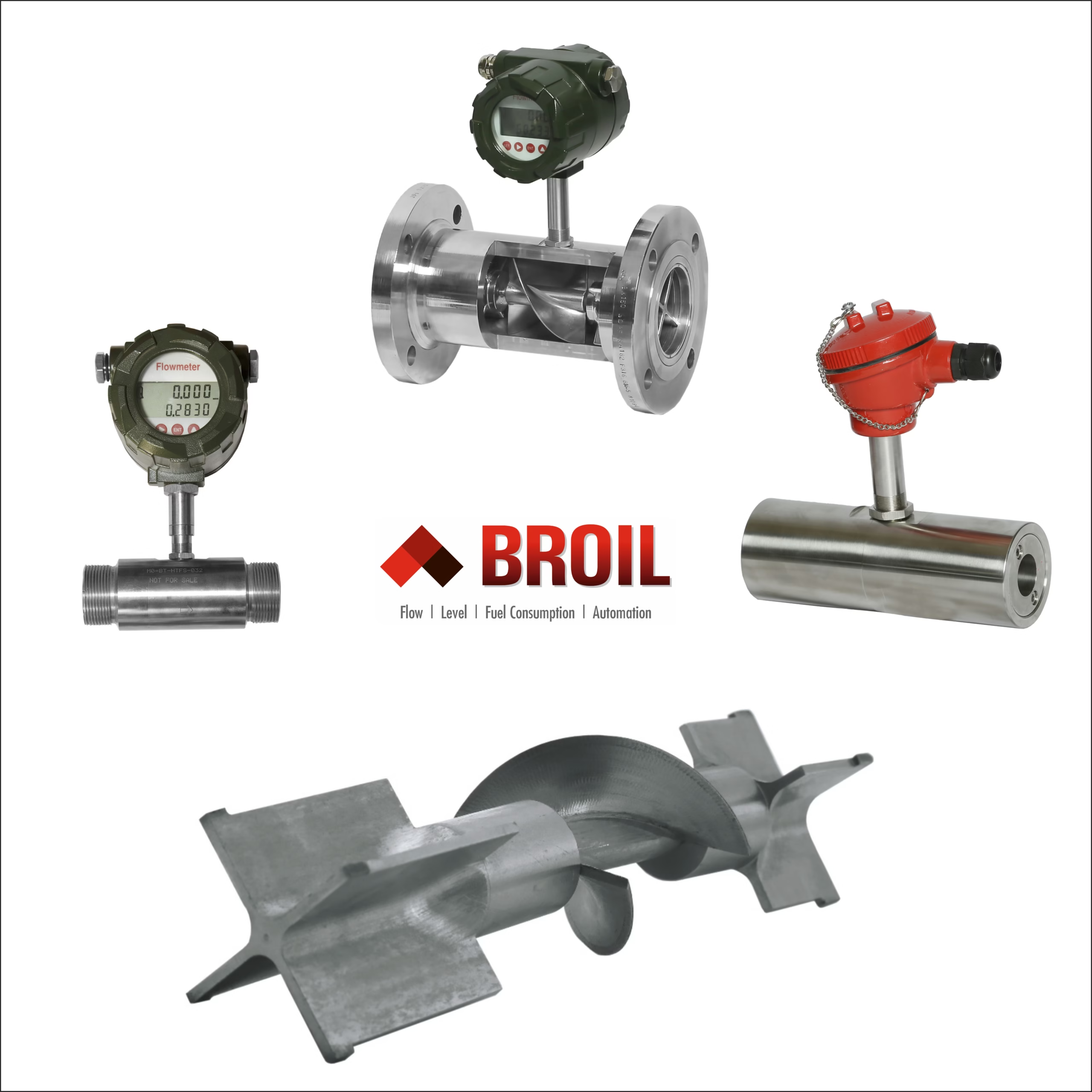
Two families
Flow meters divide broadly into positive displacement (volumetric) and velocity-based instruments. They work on different principles and serve genuinely different operational requirements, so this is the decision to make first.
Positive displacement meters measure the volume of fluid passing directly, by trapping a fixed volume in a chamber and counting how many times that happens. The oval gear meter is the common example: two oval-shaped gears rotate as liquid flows through, and the volume displaced follows from their rotation. The helical rotor meter does the same job with helical rotors. Both are strong where accuracy and consistency matter.
Velocity-based meters determine the flow rate from the speed of the fluid instead. Turbine meters use a rotor to gauge velocity as fluid passes. Electromagnetic meters apply Faraday's law of electromagnetic induction, measuring the voltage a conductive fluid generates crossing a magnetic field. Vortex meters read the vortices shed by an obstruction in the flow path. These suit varying flow conditions, though they generally need calibration and are less effective with highly viscous fluids.
Where each one belongs
Positive displacement meters are known for high accuracy and precision, which makes them the right answer where exact measurement is critical — food and beverage being the obvious case. Because a fixed amount of fluid is captured and released, the measurement reflects the actual volume passing rather than an inference from it. That holds up with viscous fluids and across varying temperatures, conditions where other methods start to lose their footing.
Velocity meters excel at handling larger volumes and a wider variety of fluid types. Water treatment, oil and gas, and chemical processing all see flow rates that fluctuate significantly, and this family adapts to that better while asking for relatively little maintenance.
Put simply: positive displacement stands out for accuracy at low flow rates; velocity provides flexibility and efficiency in high-volume applications.
Accuracy and measurement range
Positive displacement meters typically deliver accuracy within ±0.5% of reading. Because they measure volume directly, capturing a specific quantity each cycle, the measurement holds regardless of changes in temperature or pressure — which is exactly why they suit highly viscous fluids and variable conditions.
Velocity-based meters — magnetic, turbine and ultrasonic types — usually land around ±1% to ±2%. They measure the average velocity of fluid passing through, and that averaging introduces variability where the flow profile fluctuates or the fluid is not homogeneous. Viscosity affects them noticeably: higher viscosity impedes velocity measurement, which reduces reliability and increases how often you need to recalibrate.
Range works the other way round. Positive displacement meters are more constrained in the flow rates they can measure accurately, because of their mechanical nature — but they hold accuracy at the low end, which is an advantage where the range is narrow and precision matters. Velocity meters cover a broader range, with accuracy tailing off at the extremes of it.
Cost
Positive displacement meters generally carry a higher upfront cost, a consequence of their robust construction and the precision they deliver. That can put them out of reach for smaller operations. Velocity-based meters tend to be more economical, which is a large part of why they are the popular choice for less demanding duties.
Maintenance
Positive displacement meters need regular maintenance to hold accuracy — checking internal components for wear, replacing seals or gears as required. That adds to operating cost, though the ability to stay accurate in challenging conditions often justifies it.
Velocity-based meters need attention less often, usually basic cleaning of probes or sensors. The catch is that turbulence or flow fluctuation can impair accuracy, which may mean more significant recalibration over time.
Installation
Positive displacement meters need more space and a specific orientation, and straight pipe runs, which is not always feasible in a constrained plant room. Velocity-based meters are typically smaller and can be installed in various configurations, giving them a real advantage where space is tight.
The right choice comes down to the specific application: fluid characteristics, expected flow range, and the environmental conditions the meter has to live in. Tell us those three things and we will confirm the family and the model.